
[ad_1]
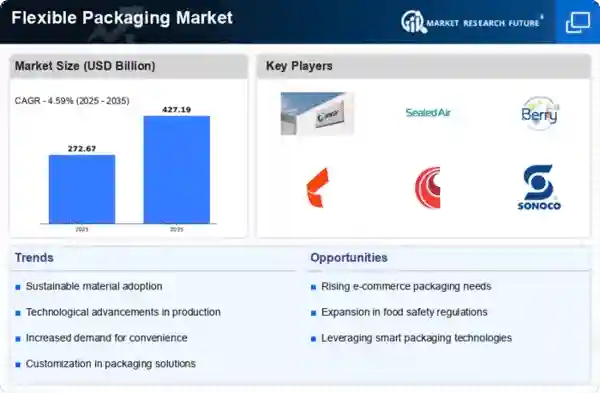
Market Drivers
- Rising Demand from the Food and Beverage Industry
Flexible packaging helps preserve freshness, extend shelf life, and reduce food waste, making it highly suitable for processed and packaged food products. - Cost Efficiency and Lightweight Properties
Compared to rigid packaging, flexible packaging uses fewer raw materials, lowers transportation costs, and reduces storage space requirements. - Growing Focus on Sustainability
The development of recyclable, biodegradable, and bio-based flexible packaging materials is encouraging adoption among environmentally conscious brands. - Rapid Urbanization and Changing Lifestyles
Busy lifestyles and the growth of on-the-go consumption have increased demand for convenient and portable packaging formats. - Technological Advancements in Packaging Materials
Innovations such as high-barrier films, smart packaging, and improved sealing technologies are enhancing product safety and functionality.
Market “Religion” (Regional Insights)
- North America
Driven by advanced packaging technologies, high consumption of packaged foods, and strong presence of major packaging manufacturers. - Europe
Growth is supported by strict sustainability regulations, recycling initiatives, and high demand for eco-friendly packaging solutions. - Asia-Pacific
The fastest-growing region due to population growth, rising disposable income, expanding food processing industries, and rapid industrialization in countries such as China and India. - Latin America and Middle East & Africa
These regions are witnessing steady growth supported by improving retail infrastructure and increasing adoption of packaged consumer goods.
Market Objectives
- Enhancing product protection and shelf life
- Reducing environmental impact through sustainable materials
- Improving cost efficiency for manufacturers and brand owners
- Supporting branding and product differentiation
- Meeting regulatory and safety standards across industries
Key Players
- Product innovation and material development
- Mergers and acquisitions
- Geographic expansion
- Investment in recyclable and eco-friendly packaging solutions
Market Challenges
- Environmental Concerns Related to Plastic Waste
Increasing scrutiny over single-use plastics can limit growth if sustainable alternatives are not adopted quickly. - Fluctuating Raw Material Prices
Volatility in petroleum-based raw materials affects production costs and profit margins. - Recycling and Waste Management Issues
Limited recycling infrastructure in some regions restricts the adoption of flexible packaging. - Regulatory Compliance
Stringent regulations related to food safety, packaging waste, and environmental impact can increase operational complexity.
Market Segmentation
By Material Type
- Plastic
- Paper
- Aluminum foil
- Biodegradable materials
By Product Type
- Pouches
- Bags
- Films and wraps
- Sachets
By Application
- Food and beverages
- Pharmaceuticals
- Personal care and cosmetics
- Household products
- Industrial goods
By End-Use Industry
- Consumer goods
- Healthcare
- Industrial manufacturing
Future Outlook
[ad_2]
Source: PR News Releaser
Global Flexible Packaging USD 427Billion by 2035 G…